Source breathable flexible waist support belt for sports, daily life, and back pain relief
Compare 30 listings for a breathable flexible waist support belt designed for sports, daily life, and back pain relief. Buyers can evaluate features like compression, material composition, and customization options from verified manufacturers in China.
Key considerations
Products List




Comprehensive Sourcing Guide
Strategic Sourcing Guide for Breathable Flexible Waist Support Belts
Understanding Product Specifications and Material Composition
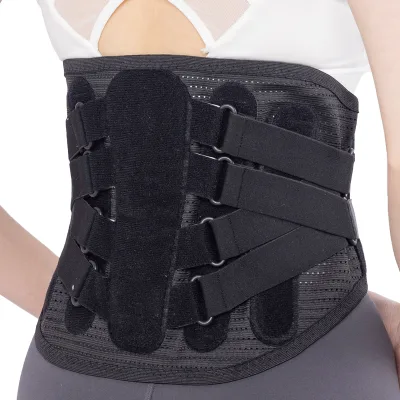
When sourcing a breathable flexible waist support belt, the primary objective is to identify products that balance structural integrity with user comfort. The market offers a diverse range of configurations, but the core technical requirements remain consistent. Buyers must scrutinize the material composition, as this dictates the belt's durability, breathability, and therapeutic efficacy. Based on current market data, the most prevalent material combinations include Nylon, SBR (Styrene-Butadiene Rubber), Ok Cloth, and internal spring mechanisms. These materials are selected to provide the necessary compression while allowing for thermal regulation, which is critical for "breathable" claims.
The structural design often incorporates a spring element to ensure the belt maintains its shape and provides consistent support during movement. This is particularly important for products marketed as "adjustable" or "elastic." The flexibility of the belt is a key differentiator; a rigid support may offer maximum stability but fails the "flexible" criteria required for active use. The product dimensions are equally critical. Sourcing teams should verify that the manufacturer offers a comprehensive size range, typically spanning from Small (S) to Extra Extra Large (XXL) or even XXXL. Specific waist circumference ranges are often cited, such as 66-82cm for Medium, 80-99cm for Large, and 93-120cm for Extra Large. Ensuring the supplier provides a detailed size chart is essential to minimize return rates and ensure proper fit for the end-user.
Furthermore, the weight of the product is a significant factor in user compliance. Heavier belts can cause fatigue during extended wear, whereas lightweight options are preferred for daily activities. Observed weights in the market vary, with some units weighing approximately 250 grams per piece and others around 315 grams. Buyers should evaluate whether the weight aligns with the intended application; a lighter belt may be preferable for sports, while a slightly heavier unit might be necessary for medical-grade fracture fixation or severe lower back pain relief. The color palette is generally standardized, with black being the dominant choice, though customization options are frequently available for bulk orders.
Compliance, Certification, and Safety Standards
Navigating the regulatory landscape is a non-negotiable aspect of B2B procurement for medical and wellness devices. A breathable flexible waist support belt often straddles the line between a general wellness accessory and a medical device, depending on the specific claims made by the manufacturer. Consequently, verifying the certification status of the product is paramount. Buyers should look for evidence of compliance with recognized international standards such as CE (Conformité Européenne) and ISO (International Organization for Standardization). Specific references in the market indicate that some suppliers adhere to ISO9001 for quality management and ANSI standards, which suggests a commitment to consistent manufacturing processes.
It is crucial to distinguish between products that are certified medical devices and those that are general wellness accessories. For instance, a product marketed for "fracture fixation" or "rehabilitation therapy" requires a higher level of regulatory scrutiny than a belt intended for "daily life" or "sport support." The presence of a "Protection Class" designation, such as "Basic Protection," provides insight into the safety level but does not replace the need for specific medical certifications. Buyers must verify if the product has undergone Ethylene Oxide sterilization, particularly if it is intended for clinical use. However, many general support belts are supplied without Ethylene Oxide sterilization, relying instead on clean manufacturing environments.
The standardization of packaging and product dimensions also plays a role in compliance. Some suppliers provide specific carton sizes, such as 504030 CM or 503250cm, which can impact logistics and storage costs. Additionally, the product model numbers, such as JLY-SWB-001 or BS032, serve as unique identifiers that buyers should cross-reference with certification documents to ensure the specific model being ordered matches the certified version. Failure to verify these details can lead to customs delays or legal liabilities, especially when importing into regions with strict medical device regulations.
Cost Drivers and Pricing Dynamics
The pricing structure for breathable flexible waist support belts is influenced by a complex interplay of factors, including material costs, customization requirements, and order volume. The observed price range in the market is quite broad, spanning from $1 to $15 USD per unit. This variance is not arbitrary; it reflects differences in material quality, manufacturing complexity, and the level of service provided. Products utilizing high-grade SBR or specialized spring mechanisms will naturally command a higher price point compared to those made from basic Nylon or Ok Cloth.
Customization is a significant cost driver. While standard, off-the-shelf products may be available at the lower end of the price spectrum, any request for custom branding, logo printing, or unique packaging will increase the unit cost. Suppliers often require a Minimum Order Quantity (MOQ) for customized orders, with typical thresholds set at 500 pieces. This MOQ requirement is a strategic lever for suppliers to offset the setup costs associated with custom tooling and branding. Buyers should be prepared for a tiered pricing model where the per-unit cost decreases as the order volume increases, but the initial investment for customization remains fixed.
Lead times also impact the final cost of procurement. Standard delivery windows are often cited as 30 days, but this can fluctuate based on order complexity and current production capacity. Suppliers with a high supply ability, such as 300,000 pieces per month, may offer more competitive pricing due to economies of scale. However, expedited shipping or rush orders will invariably incur additional charges. Buyers must factor in these variables when budgeting, ensuring that the total landed cost, including shipping and potential tariffs, aligns with their financial constraints.
Typical Applications and Usage Scenarios
The versatility of the breathable flexible waist support belt allows it to serve a wide array of applications, ranging from recreational sports to clinical rehabilitation. Understanding the specific use case is essential for selecting the right product. In the realm of sports, these belts are designed to provide "sport support" and "protect the waist" during high-impact activities. The compression feature helps stabilize the core, potentially reducing the risk of injury and improving performance. The "breathable" aspect is particularly valuable here, as it prevents overheating and moisture buildup during intense physical exertion.
For daily life applications, the focus shifts to comfort and long-term wearability. The belt is marketed for "daily life" use, offering support for individuals who spend long hours standing or sitting. The "keep warm" feature is often highlighted in this context, providing thermal therapy that can alleviate muscle stiffness. In the medical sector, the applications are more specialized. Products labeled as "Lumbar Support Orthosis" or "External Fixator" are intended for "fracture fixation" and "rehabilitation therapy." These devices are designed to "provide comfortable relief from lower back pain" and are often prescribed for patients recovering from injuries or suffering from chronic conditions.
The target demographic is primarily adults, with specific products catering to male users or unisex applications. The "applicable people" field often specifies "Adult" or "Male," though many models are designed to be unisex. Buyers should carefully review the product description to ensure the intended user group matches their target market. For example, a belt designed for "body shaping" may have different compression levels than one designed for "health care" or "medical support." Aligning the product's functional claims with the actual needs of the end-user is critical for market success.
Supplier Evaluation and Manufacturing Capabilities
Evaluating potential suppliers requires a deep dive into their manufacturing capabilities, location, and operational history. The geographic origin of the product is a key indicator of supply chain efficiency. Most breathable flexible waist support belts are manufactured in China, with specific production hubs in Jiangsu and Zhejiang provinces. These regions are known for their robust textile and medical device manufacturing ecosystems. Buyers should verify the "Place of Origin" to ensure it aligns with their logistical preferences and any trade agreements that may affect tariffs.
The supplier's ability to handle customization is another critical evaluation metric. Many manufacturers offer "OEM" (Original Equipment Manufacturer) and "ODM" (Original Design Manufacturer) services, allowing buyers to create private label products. The scope of customization can include logo printing, custom packaging, and even modifications to the product design, such as size or material composition. However, these services often come with higher MOQs, typically starting at 500 pieces. Buyers should assess whether the supplier's customization capabilities match their brand requirements and volume expectations.
Supply chain reliability is also paramount. Suppliers with a stated "Supply Ability" of 300,000 pieces per month demonstrate the capacity to handle large-scale orders without significant delays. However, buyers should also inquire about their "Delivery Detail" policies, as lead times can vary based on order volume and complexity. A supplier that promises a 30-day lead time but consistently misses deadlines poses a significant risk to the buyer's inventory management. Additionally, the "Condition" of the product, typically listed as "New," should be verified to ensure that the goods are not refurbished or second-hand items.
Quality Control and Long-Term Procurement Considerations
Implementing a robust quality control (QC) strategy is essential for maintaining product integrity and brand reputation. Buyers should establish clear acceptance criteria based on the product's physical attributes, such as weight, dimensions, and material composition. For instance, verifying that the weight falls within the expected range of 250g to 315g per piece can help identify manufacturing inconsistencies. Similarly, checking the carton size and gross/net weight (e.g., 10kg G.W., 9kg N.W.) ensures that the packaging is standardized and suitable for shipping.
Long-term procurement considerations extend beyond the initial order. Buyers should evaluate the supplier's ability to maintain consistent quality over time. This includes assessing their quality management systems, such as adherence to ISO9001 standards. Regular audits and third-party inspections can help identify potential issues before they escalate. Additionally, buyers should consider the product's lifecycle and potential for repurchase. A supplier that offers flexible MOQs and responsive customer service is better positioned to support long-term business growth.
Finally, buyers must remain vigilant regarding regulatory changes and market trends. The demand for breathable, flexible waist support belts is likely to evolve as consumer preferences shift towards more sustainable and ergonomic designs. Staying informed about new materials, technologies, and certification requirements will ensure that the procurement strategy remains competitive and compliant. By focusing on these long-term factors, buyers can build a resilient supply chain that delivers value over time.
Comparative Analysis of Product Attributes
To facilitate informed decision-making, the following table summarizes key product attributes observed in the market, highlighting the variations that buyers should consider during the sourcing process.
| Attribute | Observation A | Observation B | Observation C |
|---|---|---|---|
| Product Name | Adjustable Breathable Elastic Spring | Back Support Belt | Unisex Sports Waist Trimmer Belt |
| Material | Nylon/SBR/Ok Cloth/Spring | Nylon/SBR/Ok Cloth/Spring | Nylon/SBR/Ok Cloth/Spring |
| Size Range | M, L, XL (Specific cm ranges) | S, M, L, XL, XXL, XXXL | S, M, L, XL, XXL |
| Weight | ~315 Grams | 250g/Piece | ~315 Grams |
| Function | Compression, Protect Waist, Sport Support | Lumbar Support Orthosis | Provides Comfortable Relief From Lower Back Pain |
| Usage | Daily Life + Sports | Fracture Fixation | Daily Life + Sports |
| Certification | CE, ISO | CE, ISO9001, ANSI | CE, ISO |
| MOQ (Custom) | 500 PCS | 500 Piece/Pieces | 500 PCS |
| Origin | Jiangsu, China | Zhejiang, China | China |
| Delivery Time | 30 Days or Depends on Order | 30 Days or Depends on Order | 30 Days or Depends on Order |
This comparison underscores the importance of detailed specification verification. While the core materials and functions may appear similar, the specific application (e.g., fracture fixation vs. daily support) and certification levels vary significantly. Buyers must align these attributes with their specific procurement goals to ensure the selected product meets all necessary requirements.
FAQs
What materials are used for breathable flexible waist support belts?
These belts typically combine Nylon, SBR, Ok Cloth, and internal springs. This composition ensures structural integrity while allowing breathability and flexibility for active use.
Can buyers request custom logos on these waist support belts?
Yes, customized logo printing is available for bulk orders. However, a minimum order quantity of 500 pieces is required to cover the setup costs for branding.
Which certifications do these waist support belts typically hold?
Many models carry CE and ISO certifications to meet international standards. Some suppliers also adhere to ISO9001 and ANSI standards for quality management and safety.
How long is the standard delivery time for these belts?
The standard delivery detail is typically 30 days or depends on your specific order volume. Expedited shipping may vary based on current production capacity and order complexity.
What is the price range for these breathable waist support belts?
The observed price range in the market spans from 1 to 15 USD per unit. Costs vary based on material quality, customization levels, and the total order quantity.
Which sizes are available for these unisex waist support belts?
Available sizes range from Small to Extra Extra Large, covering specific waist circumferences. For example, Medium fits 66-82cm while Large fits 80-99cm.